A tech pack is the production spec for a single garment — essentially an engineering drawing for a piece of clothing. A good one lets a factory quote accurately, sample correctly on the first try, and produce 2,000 units that all look like each other. A bad one (or a missing one) turns every production run into an expensive negotiation.
This article is a checklist for what a tech pack needs to contain.
The core sections
A workable tech pack has at minimum:
1. Garment sketch and flat drawings
Front and back flat drawings of the garment, drawn to scale or clearly proportioned, with callouts labeling each component (collar, placket, cuff, hem, etc.). Most factories prefer vector format (AI or PDF).
2. Bill of materials (BOM)
Every component that goes into the garment:
- Main fabric — fiber content, weight (gsm), construction (jersey, twill, poplin, etc.), supplier if known
- Lining fabric (if any)
- Thread — color, tex/ticket number
- Buttons, snaps, zippers — brand, model number, color, size
- Interfacing, interlining
- Labels — size, brand, care, country-of-origin
- Hangtags and packaging
Missing any of these means the factory sources it without your input and you live with whatever they choose.
3. Points of measure (POM) table
A table of every critical measurement in the garment, usually for one base size (e.g. Small or Medium), with tolerances. Minimum useful POMs for most garments:
- Chest, waist, hip
- Shoulder width
- Sleeve length, armhole depth
- Body length (front and back)
- Neck opening
- Hem width
Tolerances are typically ±½ inch on most measurements; the factory sizes up and down from the base to create the full size run.
4. Size chart
The measurements for every size you're producing (XS-XXL typically). Either as absolute POMs per size, or as a grade rule (increment per size) applied to the base.
5. Construction details
For any non-obvious seam, stitch, or finishing choice:
- Stitch type (lockstitch, overlock, coverstitch, flatlock)
- Stitches per inch (SPI) — 10-14 for most apparel
- Seam allowance
- Hem finish (blind hem, double-needle, rolled, etc.)
- Interfacing placement
- Label placement
A callout diagram showing each detail against the flat drawing is ideal.
6. Colorways
Each color the garment will be produced in, with:
- Pantone reference (TCX for textile colors is standard)
- Lab dip approval plan — typically 2-3 rounds before bulk
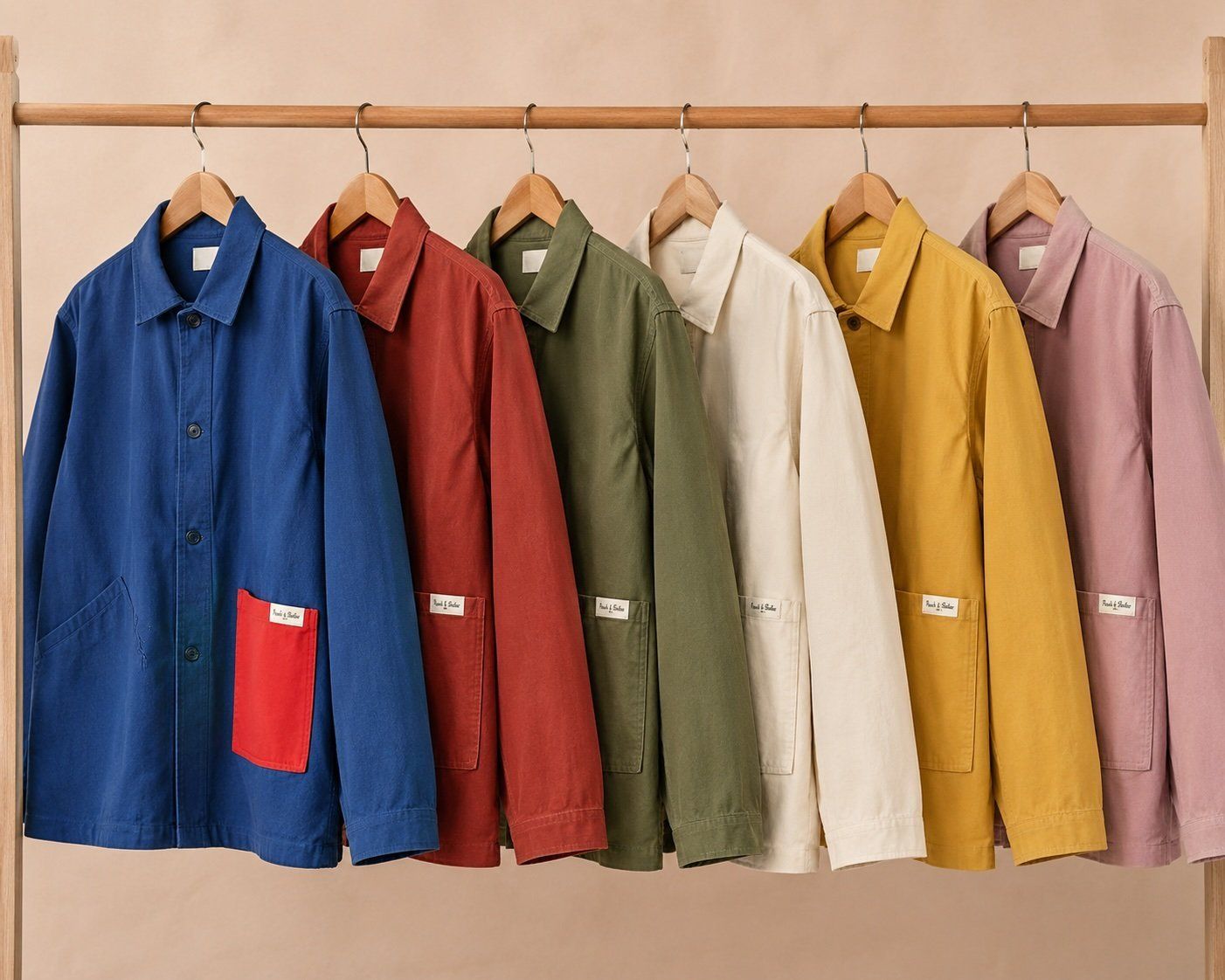
- Color placement if multi-color (e.g. body color vs contrast pocket)
7. Print / embroidery / applied art
For any decoration:
- Artwork files (vector)
- Placement measurements (e.g. centered 3 inches below neckline)
- Size of art
- Colors (Pantones)
- Print method (screen, DTG, sublimation, embroidery)
8. Packaging
- Poly bag or paper?
- Folded how?
- Hangtags attached how?
- Size sticker on poly bag?
- Master carton pack pattern
What breaks without a tech pack
- Every quote comes back assuming a different specification; comparing quotes is apples-to-oranges
- Sampling takes 3-4 rounds instead of 1-2
- Bulk production has measurement drift because "Medium" meant something different to each stitch operator
- Returns go up because size consistency varies between units
- Factory fills gaps with their default choices (cheaper thread, thinner interfacing, generic trim)
Tools that help
For a first tech pack, Google Sheets or a Word doc with inline images works fine. Dedicated tools — Techpacker, Backbone PLM, MakersValley — get useful once you're producing 10+ styles per season. For a single SKU, don't over-invest in tooling; invest in the completeness of the spec.
The 80/20 on a good tech pack
If you can only nail four sections, make them:
- Flat drawings with callouts
- Bill of materials (especially fabric specification)
- POM table with tolerances
- Colorways with Pantone references
The rest can be negotiated during sampling. Skipping the above four is where cost and quality go sideways.
Frequently asked questions about tech packs
Can I pay a factory to make me a tech pack?
Yes — many factories, including us, offer tech-pack development as a service. Expect $200-800 per style for a clean spec. The trade-off: the factory that makes your tech pack will usually assume it's producing the bulk order, so if you want to shop quotes around, you'll be sending a tech pack shaped by one factory's capabilities. A neutral pattern-maker (freelance or PLM-focused) sidesteps that.
Do I need Illustrator or a professional CAD program?
For a first tech pack, no. A well-organized Google Doc with clear hand-drawn or Procreate flats, a Bill of Materials table, and a Points of Measure table will get accurate quotes. Adobe Illustrator helps for professional flat drawings but isn't a gate. Techpacker, Backbone PLM, and MakersValley are worth it once you're producing 10+ styles per season.
Does a tech pack need fully-measured grading for every size?
Helpful but not strictly required. You can supply a base-size POM table and a grade rule (e.g., "+1 inch chest per size up") and let the factory apply it. The risk is non-linear grading (real bodies aren't linear, especially at XS and XXL) — factories usually grade conservatively and you'll correct in the size-set sample.
How do I handle tolerances?
Standard apparel tolerance is ±½ inch on most measurements, ±¼ inch on critical points (neck opening, sleeve length). State this explicitly in the POM table. At AQL inspection, garments outside tolerance get counted as defects — the factory needs to know what you'll reject.
What if I don't have trim / button specifications yet?
Write "TBD, factory to source and present options" in the Bill of Materials for undecided items. The factory will propose 2-3 alternatives at sample stage and you approve one. Don't leave critical items (main fabric, shell color) as TBD — you'll pay for ambiguity in sample rounds.
Related reading
- Apparel MOQs Explained — how tech-pack completeness directly drives your per-piece price.
- Sampling to Bulk: A Realistic 90-Day Apparel Timeline — what happens after the tech pack hits the factory.
- How to Vet an Overseas Clothing Manufacturer — the wider context for why tech packs matter when choosing between quotes.
Found this useful?
Share it with your network