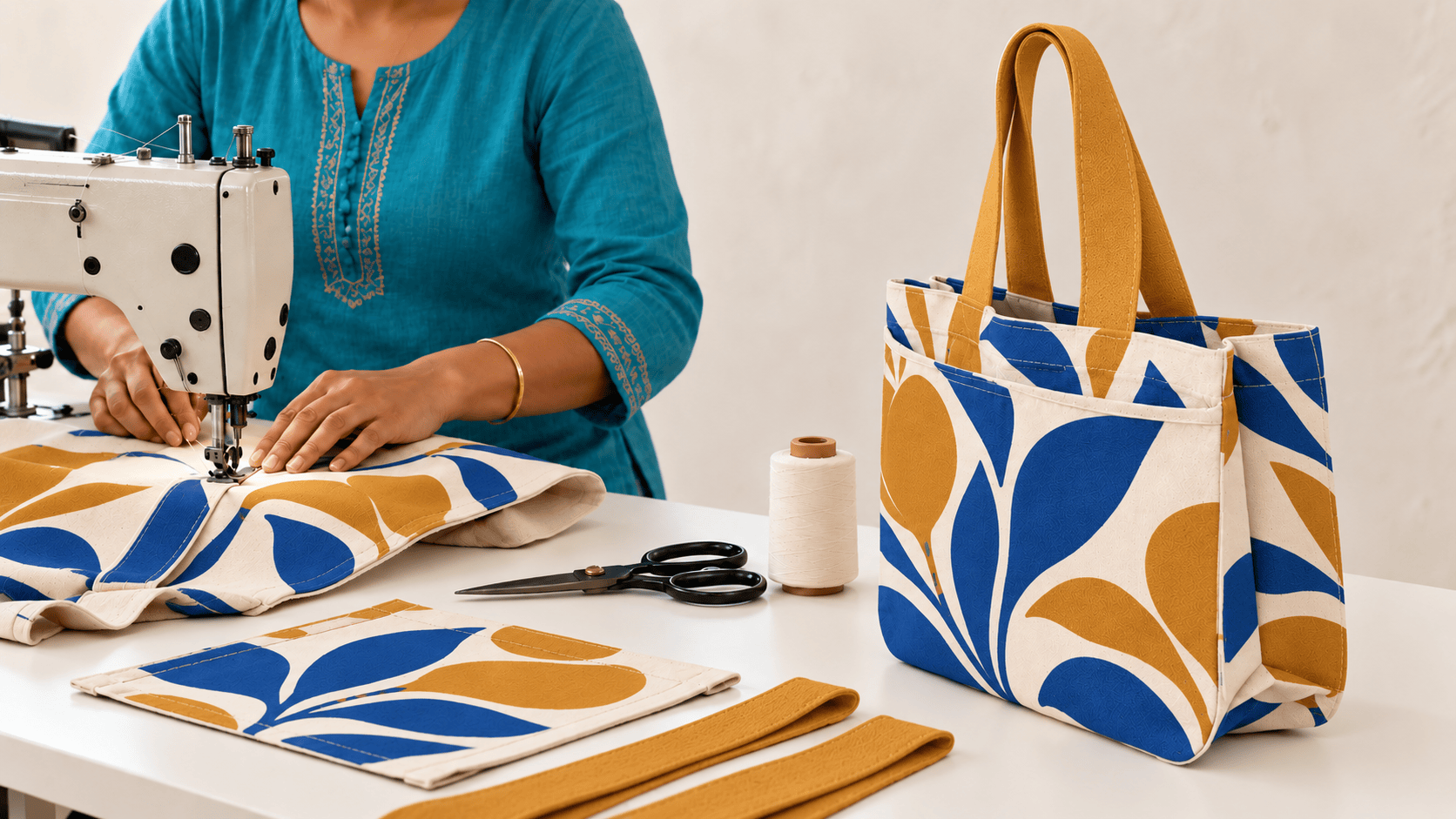
A custom product should feel like it belongs to your brand. The fabric, color, artwork, and finishing all contribute to that impression whether you’re creating restaurant aprons, retail pouches, conference bags, or a coordinated merchandise collection. With so many different customization options it can seem overwhelming.
We will work with you to make those choices together.
Start with what the product needs to do
Before choosing a print or color, think about who will use the product and how. A complimentary bag with purchase has different requirements from a retail tote. An apron needs to feel comfortable during a shift. A packaging pouch needs to fit the items inside.
Tell us what you’re making and what matters most. We can help you decide whether an existing style is a good starting point or whether your project needs custom dimensions or product development.
Choose your fabric and feel
Fabric affects how a product folds, drapes, holds its shape, and feels in someone’s hands. We offer organic cotton and other material options, with recommendations based on the project.
For canvas aprons and most bags, we suggest exploring 10 oz first. Lighter canvas may be a better fit for a foldable giveaway bag, while a project needing more body may call for a heavier fabric or different construction.
For sustainable merchandise, material selection deserves consideration alongside usefulness and design. We can discuss sourcing options and the documentation available for your selected fabric.
Make your brand color part of the product
Natural canvas can provide a versatile base for artwork. Custom dyeing offers another direction: making your signature color part of the fabric itself.
With fabric dyed-to-match Pantone references, you can coordinate products across a collection. Think matching aprons and retail bags, or apparel developed around your university’s colors.
Pantone-matched fabric and artwork are reviewed through sampling. Different materials and textures can affect how a color appears, so physical references and sample approvals help establish the final direction.Printing & Embellishment
Once the fabric is set, we offer several paths to bring your artwork to life. Choosing the right method depends on your design’s complexity and your production volume.
Screenprinting
BEST FOR:
Logos, lettering, and bold graphics
PROS:
Solid areas of color; useful for Pantone-matched artwork; can be economical at larger quantities
CONS:
Each color requires a separate screen. More colors and print locations increase setup costs. Photographs and complex gradients may suit digital printing better.
Digital Printing
BEST FOR:
Detailed illustrations, watercolor artwork, and multicolor patterns
PROS:
Captures fine detail and color variations without a separate screen for each color; useful for allover artwork
CONS:
Fabric choice affects the result. Our direct-to-fabric projects generally start with a light or natural base. Fabric minimums apply, and colors need reviewing on the actual material.
Heat Transfer
BEST FOR:
Detailed logos, multicolor graphics, and interior garment labels
PROS:
Reproduces detailed artwork with precise placement. Offers an alternative to sewn-in garment labels.
CONS:
May leave a noticeable layer on the fabric, and large designs can feel less breathable. Fabric compatibility and care requirements vary by transfer type.
Embroidery
BEST FOR:
Logos and artwork with a raised, textured finish.
PROS:
Adds dimension and a polished feel to apparel, bags, and accessories. Can provide a durable finish.
CONS:
Small lettering and fine details may lose clarity. Large or dense designs can add stiffness and weight, and artwork may need adjustment for stitching.
Customize the details people use
Consider how someone will carry, open, wear, or organize the product. Depending on the style, customization may include:
- Handle length, strap color, or webbing.
- Pockets, gussets, and interior compartments.
- Zippers, buttons, and closures.
- Product dimensions and proportions.
- Labels, hang tags, and packaging details.
An existing catalog style may already meet your needs. Changes to its shape or construction may require a new pattern and additional development. We’ll help clarify that scope before moving forward.
Review the design before production
Mockups help you consider the overall look. Fabric swatches, print or embroidery strike-offs, and sewn samples help review specific details before bulk production.
We’ll explain what each sample demonstrates and what needs your approval. Artwork size, placement, color, and construction should be reviewed together so the production team has a clear specification to follow.
Ready to make it yours?
Send us your product idea, approximate quantity, artwork, color references, delivery location, and desired in-hand date. If you have a budget range or reference sample, include that too.
You don’t need to have every detail resolved. We’ll help you turn your starting point into a practical plan for production.
Explore our catalog or email hello@workshelter.co to discuss your project.
Enjoyed this article?
Share it with your network


