A wine bar needs a tote that can carry four bottles. A fragrance brand needs a pouch that stands upright on a store shelf and keeps glass bottles snug inside. Both projects start with the same question: What does this product need to do?
You can come to us with a sketch, a reference photo, a sample you love, or a catalog style you’d like to make your own. Our team can help you work through the details, from fabric and construction to the first sample.
1. Start with what the product needs to do
If a catalog style already does what you need, it can be a starting point for your fabric, artwork, and finishing details. If the product needs a different shape or construction, tell us how people will use it. That will help us work out what to develop.
Lei, a wine bar in New York’s Chinatown, needed a bag guests could use to take home bottles from its wine program.
We made a custom four-bottle tote. Knowing what the bag had to carry gave us a much clearer brief than starting with a tote shape or a logo placement.
2. Show us what you have
We can work with you at any stage, from an early idea to a fully specified design. If you’re just getting started, send us a sketch, a reference photo, or a note about what you want to make. We can help you figure out the shape, materials, and construction. If you’ve already worked out those details, send us your tech pack and we’ll use it to develop the sample.
For Lilla Barn’s heart-print baby onesies, Bergen sent a reference garment to show the neckline she wanted. We used that reference for the neck and her measurement chart for the rest of the fit.
If you send us an existing product, tell us exactly which details you like. That gives us a clearer direction for the first sample.
3. Review the design before production
As we work through your design, we’ll talk together about what you’d like to review before production. We can recommend a mockup, a print strike-off, or a sewn sample as questions come up, and you can ask for any of them along the way.
For Nemat Perfumes’ Ulta Beauty launch, sampling helped us refine how the pouch closed and how it held the glass bottles.
We switched to a coconut button and elastic loop, tightened the interior elastic, and adjusted the pouch height so the flap folded evenly.
4. Confirm the details before production
Before we start the full run, we’ll confirm the fabric, dimensions, artwork placement, closures, labels, and packaging with you. If you’re working toward a launch, tell us when you need the finished pieces in hand so we can plan for sampling, approvals, production, and shipping.
For Form & Funk’s reusable shopping bags, the plan was to sell them folded. Victoria then used the design to create a belly band that explained what was inside, and left an opening for a loop so she could hang them in her retail space.
Finally we sewed the label along the pocket seam so Form & Funk's branding was visible while the bag was folded up. Both details helped get the bags ready for the shop floor.
5. Bring back the same design with a new look Again and Again
Once we’ve developed a product together, we can use the same pattern and construction for future orders. If you want a new fabric color or a different print, we can build on the work we’ve already done together.
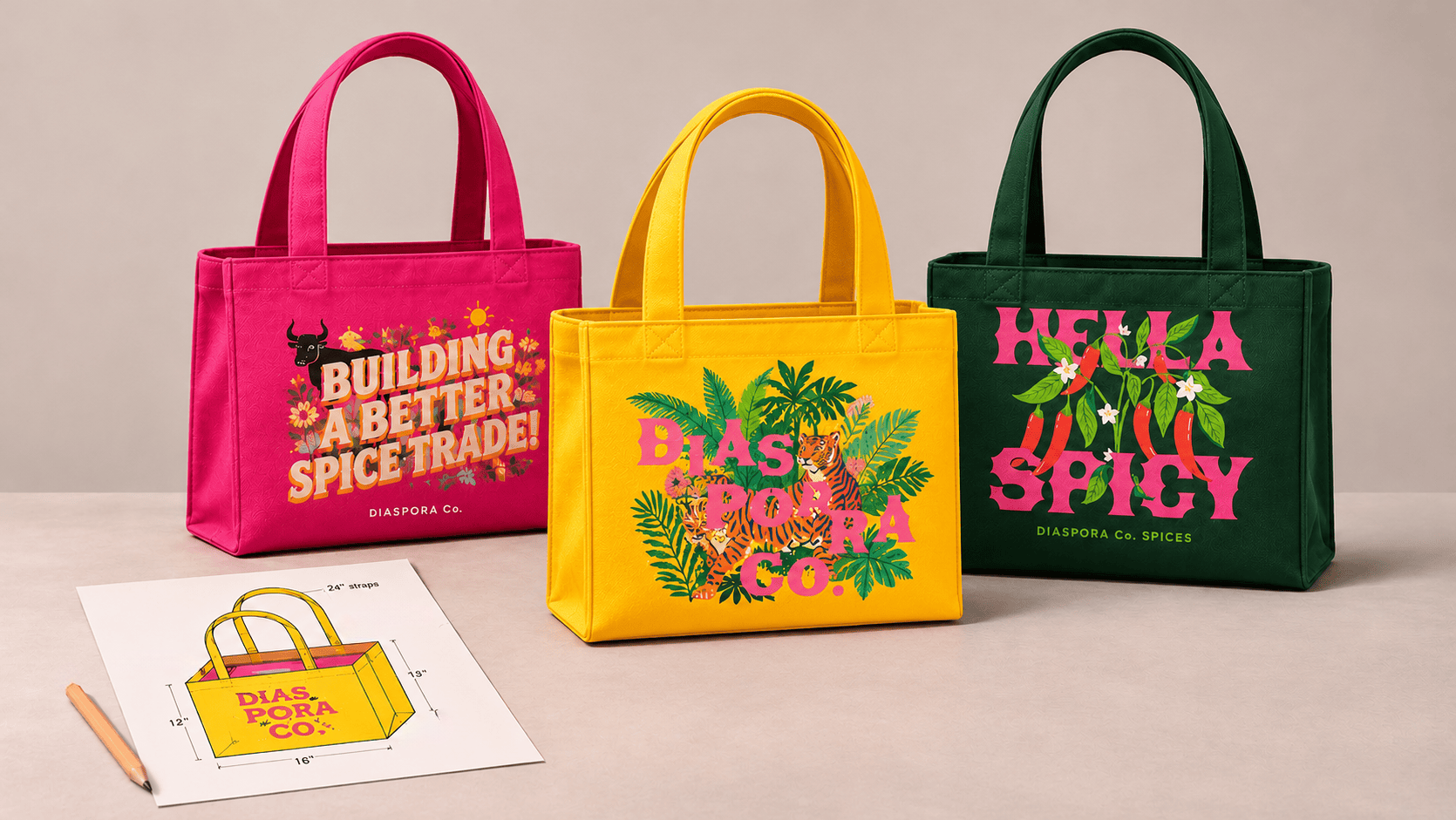
That’s how Diaspora Co. brought back its Market Tote in pink, yellow, and green, with different artwork for each edition.
Each release gave their customers something new while keeping same the roomy shape and sturdy construction they had come to love.
Have a product in mind? Send us a sketch, a photo, or a catalog link. Tell us what the product needs to do, how many you’re considering, and when you’d like it in hand. We’ll help you figure out what to customize and what to sample first.
Enjoyed this article?
Share it with your network